

AI helps mortgage brokers and loan officers with the admin around a file: document checklists, chasing missing paperwork, borrower and real estate agent updates, deadline tracking, plain-language explanations and marketing drafts. It shouldn’t make credit decisions, quote rates, or see a borrower’s full file in a public chatbot. Below are the 10 tasks worth handing off, the 5 that stay with you, a prompt for each, and the privacy rules in the US and Canada that come before any of it.
Disclosure: we make Brainmox, an AI agent for admin work. We’re onboarding real estate agents first, and mortgage brokers are next; we say more about that at the end. This guide is written for licensed brokers and loan officers in the US and Canada. Rules are summarized from official sources, checked November 21, 2026. It isn’t legal or compliance advice.
The short list
| # | Task | Kind of tool | Borrower data needed? |
|---|---|---|---|
| 1 | Document checklist per borrower | Any AI chat tool | No |
| 2 | Chasing missing documents | Email assistant or AI agent | Name and what's missing |
| 3 | Plain-language explanations | Any AI chat tool | No |
| 4 | Borrower status updates | Email assistant or AI agent | Name, stage, next date |
| 5 | Updates to real estate agent partners | Email assistant or AI agent | Stage and dates only |
| 6 | Deadline and condition tracker | AI agent or a spreadsheet prompt | Dates from the file |
| 7 | Call notes into a summary and tasks | Any AI chat tool or AI agent | Your notes |
| 8 | Marketing drafts | Any AI chat tool | No |
| 9 | Renewal and refinance check-ins | AI agent with reminders | Name and dates |
| 10 | Lender and product comparison tables | Any AI chat tool | Only the facts you paste |
Most of these work without any borrower personal information. Start there.
10 admin tasks AI can handle
1. Document checklist for each borrower
Every file starts with the same question: what do I need from this borrower? Give the AI the borrower type and it drafts the list. You check it against your lender’s requirements.
Make a document checklist for a [salaried / self-employed / commissioned / retired] borrower buying a [property type] in [state or province], with [down payment source, e.g. savings and a gift]. Group by income, assets, identity and property. Mark anything that's lender-specific as [CHECK LENDER]. No borrower names.
2. Chasing missing documents
The slowest part of most files is waiting for paperwork. A short, specific email that names exactly what’s missing and why gets better results than “please send the remaining documents”.
Draft a short email to [first name] asking for these missing items: [list]. Say what each one is for in one line, give a date we need them by ([date]) and offer a secure way to send them: [your portal or method]. Friendly, under 120 words. Don't ask them to email sensitive documents as attachments.
3. Plain-language explanations
Borrowers ask the same questions on every file. A clear, reusable explanation saves you writing it again, as long as you check it.
Explain [fixed vs variable rates / amortization vs term / mortgage default insurance / closing costs / a rate lock] to a first-time buyer in [state or province] in under 200 words, at a grade 8 reading level. Write [CHECK] next to anything that varies by lender or province. Don't quote rates.
In Canada, terms like “renewal”, “prepayment penalty” and “stress test” come up often. In the US, it’s “rate lock”, “points” and “PMI”. Name your country in the prompt.
4. Borrower status updates
Borrowers call when they don’t know what’s happening. A two-line update at each stage cuts those calls.
Write a status update email to [first name]. Stage: [application submitted / conditions outstanding / approved / documents to lawyer or title]. What happens next: [one line]. What we need from them: [item or "nothing right now"]. Next date: [date]. Under 100 words.
5. Updates to real estate agent partners
Agents want to know the deal is on track, not the borrower’s finances. Keep partner updates to stage and dates.
Write a short update to [agent's name] on the file for [property address]. Stage: [stage]. Next milestone: [condition removal / financing approval / closing] on [date]. Say whether we're on track. Don't include income, credit or any financial details about the borrower.
Check what your borrower agreed to share with their agent before you send anything.
6. Deadline and condition tracker
Rate-lock expiry, financing condition dates, appraisal and closing: one missed date costs the deal. AI turns a pile of dates into a sorted list with reminders.
From these dates, make a table: date, what's due, who's responsible, and a reminder two business days before. Sort by date and flag anything less than 5 business days away. Dates: [rate lock expiry, condition deadlines, appraisal, closing].
Check every date against the commitment letter or lock confirmation. A tracker is only as good as what you paste in.
7. Call notes into a summary and tasks
After a discovery call, you have notes and a list of follow-ups in your head. AI turns them into a short summary and tasks.
Turn these call notes into: a three-line summary, a list of documents to request, my tasks with due dates, and a short recap email to the borrower. Write [MISSING] for anything I didn't say. Notes: [paste, with account numbers and SINs or SSNs removed].
8. Marketing drafts
Newsletters, social posts and explainer videos are where most brokers already use AI. Keep it to education, and check it against your advertising rules.
Write a 150-word newsletter section explaining [topic] for homeowners in [area]. No rate quotes, no "guaranteed approval", no promises about savings. End with one line inviting readers to reply with questions.
Rate and product advertising is regulated in both countries. Run marketing past your compliance contact before it goes out.
9. Renewal and refinance check-ins
In Canada, most mortgages renew every few years, and the renewal letter from the lender is your competition. In the US, rate changes bring refinance conversations. Both need a reminder well before the date.
From this list of past clients with their [renewal / rate lock / loan] dates, list who's coming up in the next 6 months, sorted by date. For each, draft a two-line check-in that mentions their date and offers a review. No rate quotes. List: [paste names and dates only].
10. Lender and product comparison tables
When you’re comparing options for a borrower, a clean table helps you and them. AI is good at the formatting, not at knowing current terms.
Make a comparison table of these options using only the facts I paste: rate, term, prepayment rules, portability, fees and any conditions. Write "not given" where a fact is missing. Options: [paste from lender sheets].
Never let AI fill in a rate or a term it wasn’t given. Rates in a chatbot’s training data are out of date.
5 things AI shouldn’t do
1. Make or explain a credit decision
Underwriting judgment stays with people. In the US, the CFPB says creditors using complex algorithms must still give applicants “an accurate statement of reasons” for adverse action, and that rules “apply equally to all credit decisions, regardless of the technology used to make them.” CFPB Circular 2022-03.
2. Quote rates or promise an approval
A chatbot’s rate is a guess from old data. Anything a borrower reads as a quote or a promise has to come from you, with current lender information.
3. Give advice outside your licence
Tax, legal and investment questions go to the right professional. AI can help you write the questions for them.
4. Make AI voice calls without consent
In the US, the FCC ruled in February 2024 that AI-generated voices count as “artificial” voices under the TCPA, so the same consent rules apply as for prerecorded calls. Don’t set up AI calling to leads without legal advice.
5. See a full borrower file in a public AI tool
Pay stubs, tax returns, bank statements and credit reports don’t go into a consumer chatbot. See the rules below.
Privacy and data rules (US and Canada)
| Rule (where it applies) | What it means for AI use |
|---|---|
| FTC Safeguards Rule (US) | Mortgage brokers are covered. You need a written security program, a qualified person running it, encryption, MFA and oversight of service providers, which includes AI tools that touch customer data. Breaches of 500+ consumers go to the FTC within 30 days |
| CFPB Circular 2022-03 (US, creditors) | AI in credit decisions doesn't change adverse action notice duties |
| TCPA, FCC ruling of Feb 2024 (US) | AI voice calls need consent like prerecorded calls |
| CAN-SPAM (US) | Marketing emails need a real sender, a postal address and a working opt-out |
| PIPEDA and the OPC's generative AI principles (Canada) | Put personal information in prompts only when necessary and authorized; prefer de-identified data; you stay accountable for decisions |
| CASL (Canada) | Consent, sender ID and unsubscribe for commercial emails and texts |
| Your provincial or state regulator and your brokerage (US and Canada) | Often stricter on advertising, record keeping and client data |
Sources: FTC Safeguards Rule guide, CFPB Circular 2022-03, OPC principles for generative AI (December 2023), FTC CAN-SPAM guide, CASL. This is a summary to help you ask the right questions, not legal advice.
How to start without a compliance problem
- Start with tasks 1, 3, 8 and 10. They need no borrower data at all.
- Strip identifiers. “Borrower A, salaried, $95,000” works as well as a name and an SIN or SSN.
- Use a business account with training off for anything that touches client details, and add the tool to your Safeguards Rule service-provider list (US) or privacy policy (Canada).
- Keep “use only these facts” in every prompt. Most AI mistakes in mortgage copy are invented rates, terms or conditions.
- Read everything before it goes to a borrower. You’re accountable for it, not the tool.
If you also work with real estate agents, the AI for real estate agents guide covers their side of the same deals, and ChatGPT for real estate agents shows a setup that keeps ChatGPT to your facts.
Where Brainmox fits
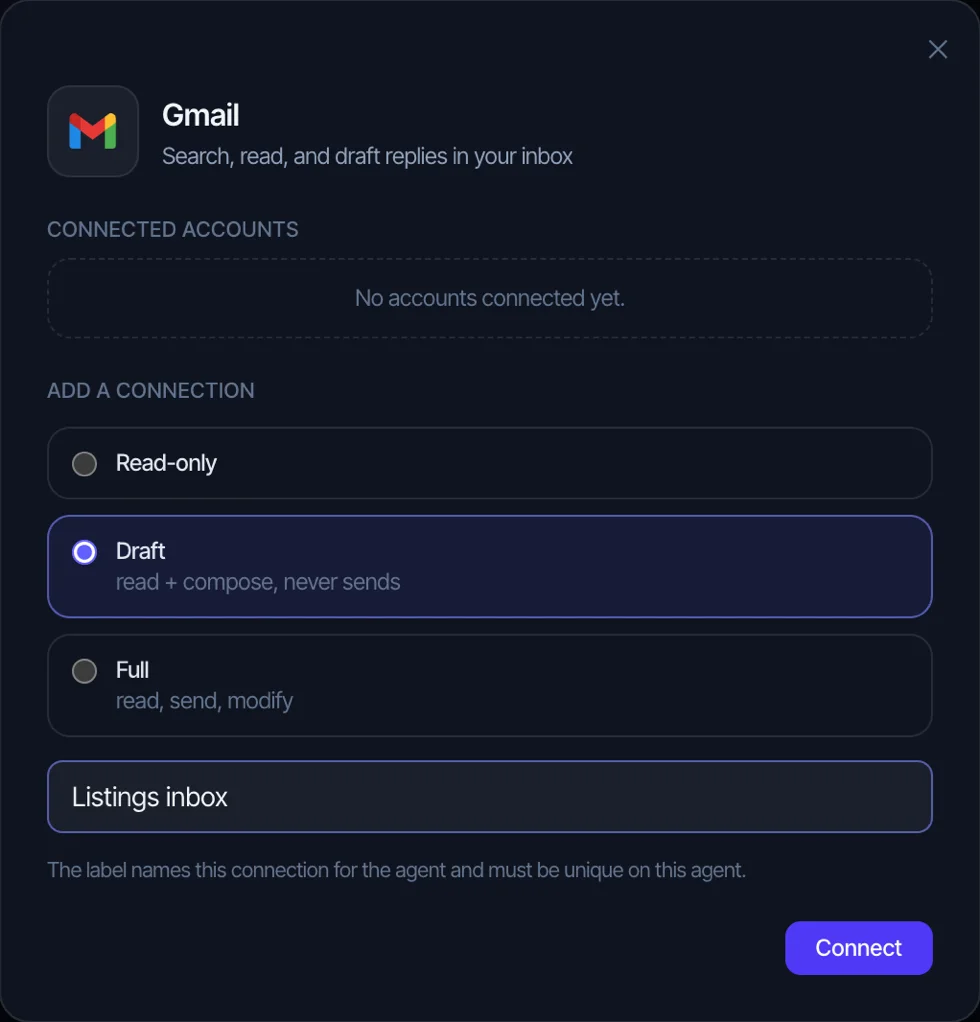
Brainmox is your own AI agent, set up with you by a person on our team. Today it handles the general admin in this list: it drafts emails in your Gmail or Outlook (with draft-only access, you send them), adds deadlines to your calendar, keeps follow-up lists and reminders, reads PDFs you send it, and remembers your clients and how you write. It doesn’t make calls, text borrowers, sync with your LOS or CRM, or make any credit decision.
We’re onboarding real estate agents first, and mortgage brokers are next. If you’d like to be in the first group, join the waitlist as a mortgage broker and we’ll reach out when we start.
FAQ
How are mortgage brokers using AI?
For admin and communication: document checklists, chasing paperwork, borrower and agent updates, call summaries, deadline tracking and marketing drafts. Credit decisions and rate quotes stay with the broker and the lender.
Will AI replace loan officers?
Not the parts that need judgment, a licence and a relationship: structuring a file, advising a borrower and getting a deal through conditions. It can take over much of the writing and tracking around that work.
Can I put borrower documents into ChatGPT?
Not a full file into a consumer account. In the US, the FTC Safeguards Rule covers mortgage brokers and requires oversight of service providers that handle customer information. In Canada, the privacy commissioner’s guidance is to use personal information in prompts only when necessary and authorized. Strip identifiers, or use a business tool your security program covers.
What AI tools do mortgage brokers use?
General AI chat tools for writing and explanations, the assistant in Gmail or Outlook for email, meeting-note tools for calls, and features inside LOS and CRM platforms. Pick by task, and check how each one handles client data before you use it with a real file.